
1 December 2026 PST
oneAPI Dev Summit 2026: Advancing AI, HPC, and Edge with oneAPI
Explore oneAPI across AI, high performance computing, and edge applications. Join developers and researchers for technical sessions and a hands-on workshop.
Agenda
All agenda times below are Pacific Time (PST). Agenda subject to change.
Main track
Workshop track — runs in parallel
| Time (PST) | Session | Speakers |
|---|---|---|
| 08:00–10:00 | Hands-On Deep Learning with oneAPI on CPUs and GPUs | Akshay Bhuvaneswari Ramakrishnan |
Sessions and speakers
Welcome
Sri Ramkrishna will open the conference with a warm welcome and introduction to our keynote speaker, followed by the UXL State of the Union.

Sriram Ramkrishna
Founder, Stone and Key Consulting
Sriram Ramkrishna (Sri) is an ecosystem builder. His work has centered on building the communities,programmes and events that open source projects depend on — and on connecting the people inside them.
He founded Stone & Key Consulting, where he advises organisations on open source strategy, community engagement and developer relations.
He serves as President of the GNOME Foundation Board of Directors, and is a co-founder of the Linux App Summit, an annual conference organised jointly with the KDE community.
His previous roles include Intel, where he led community and developer engagement for the oneAPI initiative, and ITRenew as a Principal Ecosystems Engineer working on open hardware and circular-economy infrastructure. He has worked on open hardware firmware projects including openBMC, coreboot and LinuxBoot, and on large-scale Linux storage.
A frequent speaker on community, sustainability and the open source desktop, he has presented at All Things Open, SCaLE, FOSDEM and GUADEC. He lives in Portland, Oregon.
Keynote: AMD and UXL: With ZenDNN/oneDNN integration
This keynote explores AMD’s collaboration with the UXL Foundation through ZenDNN and oneDNN integration, and what that work means for the oneAPI ecosystem.
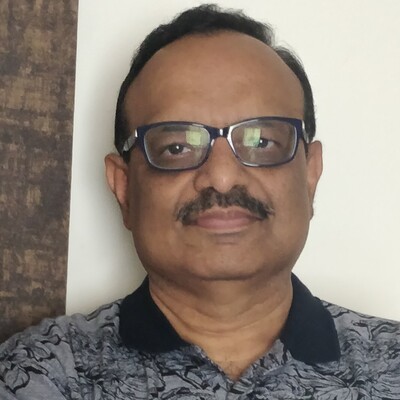
Prakash Raghavendra
Senior Fellow, AMD
Dr. Prakash Raghavendra is PhD from the Department of CSA, IISc, in Parallelizing
Compilers. Prakash has worked in HPE and Adobe before joining AMD, Bangalore in 2012. Since then,
Prakash has been working as Sr. Fellow in AMD, Bangalore, in AI and server software optimizations.
Dr. Prakash has several International Conference/Journal papers and patents to his credit.
State of the Union: UXL Foundation
Join us as Andrew Wafaa (Arm) and Sesh Seshagiri (Qualcomm) updates the community on the latest happenings under the UXL.

Andrew Wafaa
Arm, Yocto Project, W3C, FreeBSD Foundation, UXL Foundation, PyTorch Foundation
Andrew leads Arm's Open Source Office as well as upstream interactions. He also sits on a number of industry and software bodies/projects including Yocto Project, FreeBSD Foundation, Xen, UXL Foundation, W3C & PyTorch Foundation
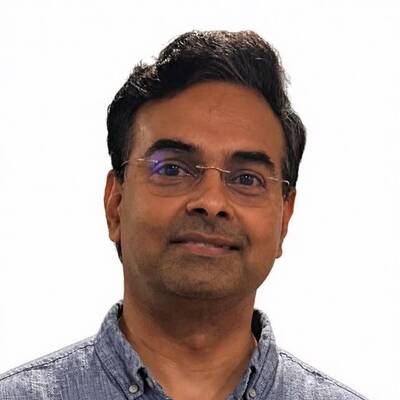
Sesh Seshagiri
Senior Director, AI Product Management at Qualcomm
Sesh is currently a Senior Director, AI Product Management at Qualcomm, responsible for AI Software – Infrastructure and Tools. Prior to Qualcomm, Sesh led the OpenVINO product management at Intel.
From DTC Codes to Actionable Insights for Enterprise Vehicle Health Management with oneAPI
This tech talk presents a hybrid AI pipeline that transforms noisy vehicle Diagnostic Trouble Codes (DTCs) and live OBD-II/J1939 sensor data into actionable maintenance insights for enterprise fleets.
The classical ML layer, accelerated by Intel® oneDAL, analyzes telemetry for anomaly detection, risk scoring, failure prediction, and remaining useful life estimation. The LLM layer, optimized using Intel® oneDNN and technologies such as IPEX-LLM, OpenVINO, or vLLM, combines ML predictions with manufacturer manuals, service bulletins, and repair histories to generate natural-language explanations, root-cause hypotheses, and prioritized maintenance recommendations.
Running on Intel® Xeon 6 cloud instances, the solution leverages AMX and optimized inference to support scalable, cost-effective CPU-based AI without requiring GPUs for every workload.
Enterprise benefits include fewer unexpected breakdowns, reduced maintenance costs, improved vehicle uptime, faster diagnosis, and intelligent maintenance scheduling. Existing telematics, OBD adapters, open-source models, and public datasets make the solution practical to implement and demonstrate.
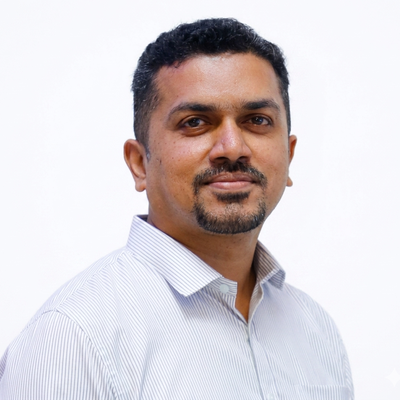
Anish Kumar
Zinier Technologies Pvt Ltd
Anish is the Head of AI Practice at Zinier. Formerly he was AI Software Engineering Manager at Intel for Asia Pacific south region, where he empowers enterprises to unleash the transformative power of Artificial Intelligence. Through high-impact workshops, training, and collaborative engineering, Anish accelerates Generative AI adoption, drives innovation, and fuels business growth. Anish comes with over 22years of industry experience
Enabling Portable Collective Communication on Heterogeneous GPU Systems with oneCCL
Multi-node GPU systems are the foundation of modern, highperformance computing and deep neural networks training.
While vendor-specific collective communication libraries such as NVIDIA’s NCCL deliver superior performance over traditional MPI, they sacrifice portability by tightly coupling applications to a single hardware platform.
The oneAPI Collective Communications Library (oneCCL), as part of the oneAPI ecosystem, aims to provide a vendor-agnostic communication API for heterogeneous GPU clusters, but its support for non-Intel hardware remains limited.
In this session we present a lightweight integration layer that bridges oneCCL’s portable API with vendor-optimized backends, mapping oneCCL collective calls to native implementations such as NCCL on NVIDIA GPUs and RCCL on AMD GPUs. This design preserves source-level portability through the SYCL programming model and the oneCCL API while delivering communication performance on par with the underlying native library. We evaluate our approach on NVIDIA A100 GPUs and AMD MI250x GPUs, comparing vensor specific libary such as NCCL and RCCL with our oneCCL integration across allreduce and alltoall collectives, with multiple data types and message sizes, in both intra-node and inter-node configurations. Experimental results show that oneCCL achieve near-identical performance against native backends without losing cross-platform portability.
Acknowledgments: This work was carried out at the University of Salerno, Italy, in collaboration with Salvatore Sirica and Prof. Biagio Cosenza.
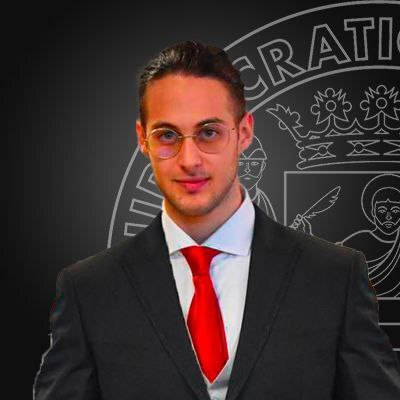
Lorenzo Carpentieri
University of Salerno – Ph.D. in Computer Science | HPC
Lorenzo Carpentieri received his M.Sc. degree in Computer Science in 2022 and his Ph.D. in Computer Science in 2026 from the University of Salerno, Italy. He conducted his doctoral research under the supervision of Prof. Biagio Cosenza. He is currently working as an HPC Specialist at Eni S.p.A., Italy. His research interests include high-performance computing, heterogeneous computing architectures, compiler technologies, and parallel programming models, with a particular focus on energy-efficient computing, approximate computing techniques, and GPU programming.
SyclKittens: Fast Intel GPU Kernels with SYCL and AI Coding Agents
AI coding agents can write GPU kernels, but generating correct code is only the first step. Achieving high performance requires hardware-aware choices about operand layouts, memory movement, and execution schedules. How can a programming library make that expertise accessible to both developers and agents?
This session introduces SyclKittens, an open-source, header-only tile programming library built on SYCL and the Intel oneAPI DPC++ compiler. Through a matrix multiplication walkthrough, we will show how its tile operations organize data for GPU matrix engines and support efficient memory pipelines while leaving workload-specific scheduling decisions programmable. We will then connect these building blocks to kernel fusion and multi-GPU communication for AI inference.
We will also examine an agent-assisted write-compile-test-tune workflow and the importance of choosing the right programming interface. In controlled GEMM experiments, the strongest tested agent reaches 82.1% of Intel’s tuned oneDNN performance with SyclKittens, compared with 57.5% using raw SYCL under matched task and feedback budgets. Beyond isolated kernels, the jointly refined suite delivers a measured 1.59x speedup over torch.compile for Llama-3.1-8B inference on one GPU.
Attendees will learn how to get started with SyclKittens, identify which hardware details belong in reusable primitives, and evaluate agent-generated kernels against optimized baselines. The session targets C++/SYCL developers and AI performance engineers; no prior tile-programming experience is required.
Code: https://github.com/intel/SyclKittens
Yehong Jiang
MIT, Student; Intel Corporation, Intern
Yehong Jiang is a student at the Massachusetts Institute of Technology and a co-author of SyclKittens, an open-source tile programming library for Intel GPUs. Yehong contributed to SyclKittens during an internship at Intel. The work explores how hardware-aware programming abstractions help developers and AI coding agents build high-performance kernels, spanning matrix multiplication, attention, and multi-GPU inference.
Extending oneDNN’s Asynchronous Execution Support on Arm
To support efficient AI inference on Arm CPUs, we have extended oneDNN’s AArch64 backend to work with XLA’s asynchronous CPU runtime.
Building on oneDNN’s existing asynchronous execution infrastructure, we adapted Arm-optimised primitives for safe asynchronous threadpool execution, including BRGEMM-based matrix multiplication, convolution, softmax, layer normalization, elementwise operations, and JIT-optimised reorders. These contributions enable the XLA to leverage optimised oneDNN kernels across diverse AI inference workloads, including vision, embedding, and recommendation models.

Crefeda Rodrigues
Arm, Staff Software Engineer
Crefeda Rodrigues is a Staff Software Engineer at Arm, focusing on performance and scalability driven machine learning software optimization for Arm server CPUs. She previously worked on large-scale climate and weather model optimization as a postdoctoral researcher at the University of Manchester and holds a PhD in energy-efficient machine learning.
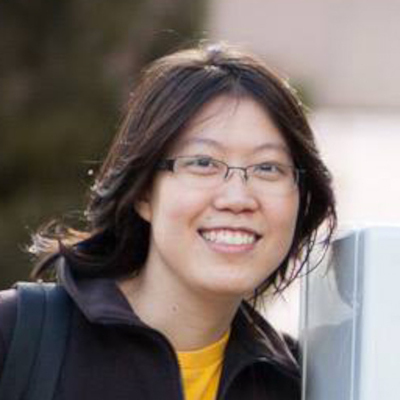
Penporn Koanantakool
Google, Software Engineer
Penporn Koanantakool is a technical lead in the OpenXLA machine learning compiler team at Google. She oversees the integration of OpenXLA, JAX, and TensorFlow with oneAPI software and currently represents Google on the Unified Acceleration (UXL) Foundation's Steering Committee. Prior to OpenXLA, she has also worked on TensorFlow CPU/GPU performance optimization and led the creation of the first device plug-in mechanism in TensorFlow. Penporn holds a Ph.D. in computer science from the University of California, Berkeley.
oneDAL Under an Industrial AI Agent
The agent's language model that runs for manufacturing plants, never computes losses itself: it calls tools that cluster machine stops, detect cycle-time drift and rank the drivers of lost production, then cites their results.
Those tools run every night for every plant and on demand when someone asks a question, on a CPU-only hardware at the plant edge. That makes CPU efficiency relevant.
This talk shows how the tool layer uses oneDAL through the Intel Extension for Scikit-learn:
• The workloads: DBSCAN and k-means over stop events, nearest-neighbour drift detection on cycle times, random-forest ranking of loss drivers, PCA over multi-signal machine data.
• The integration: patching existing scikit-learn code, what changed and what didn't, and how results are checked against stock scikit-learn before an agent may cite them.
• The numbers: latency per tool call and compute cost per plant per day, stock versus oneDAL, on production plant data (N machines, M events per day).
• The agent side: how fast, deterministic tools change agent design: fewer cached answers, fresher briefings, shorter waits in chat.
Code and a synthetic plant generator are on GitHub, so attendees can reproduce the benchmarks.
Takeaways
1. A pattern for putting oneAPI-accelerated analytics behind an agent's tool interface.
2. Measured speed-ups and cost on a real-shaped manufacturing workload.
3. A reproducible repo to try it on your own data.

Yuri Winche Achermann
NCAM, Co-Founder | building AI agents for manufacturing
Aerospace engineer building AI agents for manufacturing plants in Brazil. Former CTO and co-founder of a manufacturing-tech startup in Germany, built a CNC predictive-maintenance system with RWTH and Fraunhofer.
Overall, contributed to projects with NASA Innovative Advanced Concepts and MIT GeneSys, worked with Artefact data consulting, the Fraunhofer Institute for Production Technology (IPT) and the startups later on.
oneDNN Stack Simplification on AArch64: replacing the foundations without the house falling down
We are in the process of simplifying the oneDNN stack on AArch64 by replacing Compute Library (ACL) with KleidiAI. Cutting layers out of the stack is providing new optimization opportunities and improving development velocity. We will discuss progress, pitfalls and interesting things we have discovered on the way.

Jonathan Deakin
Staff Software Engineer
Jonathan is a software engineer at Arm responsible for the architecture of the oneDNN AArch64 backend. He has been an upstream contributor to oneDNN for over 4 years. He takes a keen interest in the intersection of Maths and Computers, and before joining Arm completed a PhD in Mathematical Science.
Evidence, Not Claims: Teaching Coding Agents the Last Mile of CUDA-to-SYCL Migration
SYCLomatic migrates most of a CUDA code base to SYCL. What remains is the last mile: code it could not translate, output full of dpct helpers, and no proof the port still behaves like the original. Coding agents can do this work, but left alone they drift back to CUDA idioms and report success without checking.
We present oneapi-agent-toolkit, an open-source MCP server and agent skill that gives Claude Code, Codex, Cursor and other MCP-capable agents five tools: migrate (SYCLomatic), compile (icpx), scan_helpers, verify and benchmark. Inspired by the evidence-first design of the REA project, every tool returns structured evidence and its limitations, never a bare claim. A port counts as done only when behavioural verification passes and no dpct helpers remain, both on the same source.
We ran 120 ports of four workloads (an audio waveshaper, a 64-tap FIR filter, SAXPY and HeCBench softmax) on two Claude models, and graded every final port with a hidden test. With the toolkit, 40 of 40 ports were correct and helper-free. Without its checks, 23 of 40 were, and one unchecked softmax port compiled cleanly yet got 332,679 of 524,288 outputs wrong. Giving the agent a shell to test its own code removed wrong output but not unfinished migration: only 14 of 40 ports were helper-free. SYCLomatic shows the same failure mode: its softmax output compiled with zero warnings while expf had silently become a reduced-precision builtin.
Then we closed the loop from CUDA to GPU with no human edits. On five HeCBench programs the agent had never seen, it produced 15 of 15 correct, helper-free ports with the toolkit and 6 of 15 without. A one-command GPU test, which rents a machine, runs the checks and always deletes it, then ran the agent's unedited ports on NVIDIA GPUs and an AMD Instinct MI350X: all 10 matched both the C++ reference and the original CUDA built for that GPU.
We demo the toolkit live and discuss where agents still fail and what it takes to trust AI-written oneAPI code.
Code, results and every run’s evidence: https://github.com/checocadena/oneapi-agent-toolkit

Checo Cadena
Artist · Engineer · Creative Technologist
Checo Cadena is a New York–based creative technologist and music producer who builds systems where audio, robotics, and AI meet. As a Computer Control Engineer at Amorphic Robot Works, Checo leads technical development of Getty-funded robotic art installations, including Dual Pneuma at UC Irvine's Beall Center for Art + Technology. Checo holds an M.A. from Berklee NYC and a degree in Integrated Design and Media from NYU Tandon, and trained at IRCAM in Paris. Checo created oneapi-agent-toolkit, an open-source project that teaches coding agents to port CUDA to SYCL and verify the results. Two of its first examples are audio effects.
Beyond Model Inference: Coordinating Agentic AI Workflows with oneTBB
Abstract
Agentic AI applications are more than model inference. A single user task can involve document parsing, OCR, retrieval, data transformation, tool execution, and model interaction, with many of these stages executing concurrently on the CPU. As these components are composed into end-to-end workflows, independently optimized thread pools and libraries can compete for the same compute resources, making application-level scheduling increasingly important.
This session presents a case study based on an end-to-end document intelligence workflow. We characterize where CPU time is spent, examine how key stages respond to increasing thread counts, and explore how oneTBB can coordinate parallel work across stages rather than optimizing each component independently.
Using oneTBB task-based concurrency and execution controls, we investigate how workload-aware concurrency can improve resource utilization and end-to-end execution as multiple agent activities run simultaneously.
The case study highlights an emerging optimization opportunity for AI systems: performance is determined not only by how efficiently individual kernels execute, but also by how efficiently the system coordinates the heterogeneous work surrounding the model.
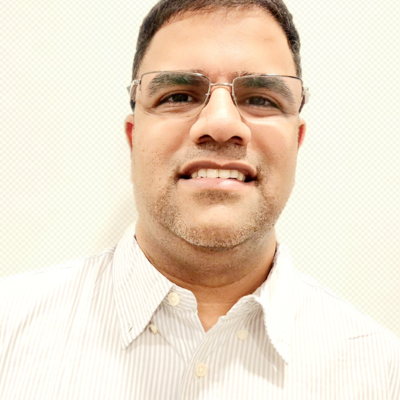
Manuj Sabharwal
Intel
Manuj Sabharwal is a Principal Engineer at Intel working at the intersection of agentic AI, systems optimization, and the software ecosystem. He focuses on identifying emerging workload needs and driving cross-stack innovations that improve performance, efficiency, and the developer experience on Intel platforms.
Indigenous and data scarce language model training and inference using oneAPI and oneDNN
Bezoku is a digital firewall for Indigenous and data scarce languages and cultures.
Recurrent Neural Network (RNN) properties are the optimal fit where: i) training data availability is low, and / or, ii) there is complexity (syntactic and / or morphological) of the ~ 6,000 left behind languages.
Use Case: how to increase the context length of Indigenous and data scarce language models that are trained using RNN architectures
Newer RNN architectures are only available on CUDA (Compute Capability > 8.0), for example facilitating NXAI's xLSTM innovations. NXAI's xLSTM models benefit from fused CUDA kernels, e.g. flashRNN, making the models easier to build.
Because oneAPI and oneDNN only support vanilla RNN / LSTM primitives, xLSTM models are currently only available on CUDA supported hardware.
Increasing context length is important for Indigenous and data scarce language models because vanilla biLSTM gates saturate and gradients vanish when modeling long context lengths. Model training speed is less of a factor – due to the lower availability of corpora.
This session demonstrates how oneAPI Base Toolkit and oneDNN libraries can be leveraged to enhance token context lengths, whereby sigmoid gate activation (from the vanilla biLSTM encoder) is replaced with an sLSTM inspired encoder to facilitate an exponential gate, which manages gradient flow and memory. For GPU operations, the model will utilise the SYCL backend, via IPEX.
Furthermore, due to the specific model runner design for lower specification handsets, the model is further optimised for ONNX on device inference.
By enabling this new encoder, our models will train on Intel GPUs formally designed for inference on a huge variety of lower specification handsets – thereby increasing inclusion for Indigenous and data scarce communities, particularly in rural settings.
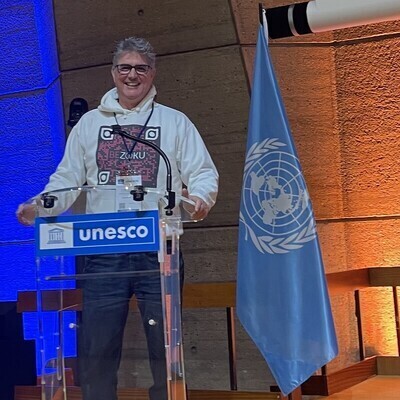
Ian Gilmour
Director
Ian Gilmour is the lead engineer and product designer for Bezoku Limited (Canada) and AI Forum (UK).
Ian holds a degree in economics and previously worked for Deutsche Bank, IBM and PwC.
OpenVINO on SYCL: Leveraging SYCL Interoperability and oneDNN for Multi-Vendor GPUs
OpenVINO is an open-source deep learning toolkit developed by Intel. It supports CPUs, Intel GPUs, and Intel NPUs through its plugin architecture. The GPU plugin is built on OpenCL and uses oneDNN for performance-critical primitives such as matrix multiplication. However, the current implementation cannot use vendor-optimized libraries such as cuBLAS through oneDNN, which limits its performance on non-Intel GPUs. In this talk, we introduce a SYCL-based runtime for OpenVINO that uses SYCL as a vendor-agnostic interoperability layer. Unlike OpenCL, SYCL provides access to native backend objects, enabling OpenVINO to use vendor-optimized libraries via oneDNN on each device. We also leverage this interoperability to run OpenVINO’s existing OpenCL kernels without rewriting them in SYCL. We further discuss accelerating attention layers with vendor libraries, currently cuDNN on NVIDIA GPUs. We have been submitting these changes upstream, and several have already been merged. Finally, we present performance results on LLM inference, along with current limitations and future directions.
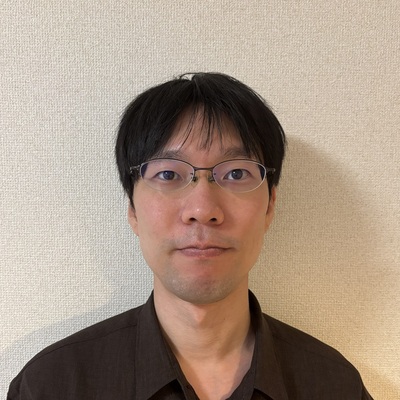
Akihiro Tabuchi
Principal Researcher, Fujitsu
Akihiro Tabuchi is a Principal Researcher at Fujitsu. He received his Ph.D. in Engineering from the University of Tsukuba in 2018 under the supervision of Prof. Mitsuhisa Sato. At Fujitsu, he works on performance optimization of AI workloads and the development of AI frameworks. His research interests include parallel programming models, compilers, and accelerators for AI and HPC.
Hands-On Deep Learning with oneAPI on CPUs and GPUs
Deep learning teams increasingly need models that run well across heterogeneous hardware without being locked to one vendor’s stack. This 2-hour hands-on workshop shows how oneAPI makes that practical. Participants start with a standard PyTorch image-classification workflow and run it on CPU and Intel GPU (XPU) backends. They then use oneDNN verbose logging and profiling to see which primitives execute and where time goes. From there they apply bfloat16 mixed precision, operator fusion, and graph compilation to speed up training and inference, and finish by scaling training across devices with oneCCL.
The running example is a medical-imaging classifier, which illustrates the “oneAPI across verticals” theme: healthcare workloads where data is limited, latency matters, and deployment targets vary. Attendees leave with a reproducible GitHub repo, a profiling checklist, and a clear picture of how oneDNN, oneCCL, and SYCL fit into the deep learning stack.

Akshay Bhuvaneswari Ramakrishnan
Presidential Research Fellow, Georgia Southern University
Akshay Bhuvaneswari Ramakrishnan is a Presidential Research Fellow in Applied Computing at Georgia Southern University and Co-PI of the SAIL Lab, with an MS in Data Science from Johns Hopkins University. His research focuses on multimodal and explainable AI for clinical diagnostics. He has delivered 50+ international AI/ML workshops and authored 20+ publications and have authored 4 books.